
Facing a divorce or custody issue can be one of life’s most difficult transitions—but understanding your rights under Texas law and finding the right advocate can make it less overwhelming. Choosing the right family law attorney starts with a simple step: clearly defining your own needs and goals before you even start looking.
In the emotional whirlwind of a family law matter, it’s easy to jump straight into calling lawyers without a clear picture of what you actually need. Whether you’re facing a high-conflict custody fight or a fairly amicable split, taking a moment to understand your priorities is the single best thing you can do to find an advocate who can truly represent your interests.
Defining What You Need in a Family Law Attorney
Let’s be honest—facing a divorce, custody dispute, or any family law matter is disorienting. This is a deeply personal process, and the legal system can feel overwhelming and impersonal. Before you can find the right person to guide you through it, you first have to draw a map of your own situation. This means taking an honest inventory of your circumstances, what matters most to you, and what you realistically hope to achieve.
Not all family lawyers are the same. Their expertise can vary dramatically. An attorney who is a wizard with high-asset divorces and complex business valuations might not be the best fit for a military family navigating a tricky relocation and custody agreement. So, the first move is always to look inward.
Identify Your Primary Legal Issues
Your situation is unique. Is your number one concern protecting your relationship with your children? Or is the main event going to be the fair division of a complicated marital estate? Pinpointing the central conflict from the get-go helps you narrow your search to attorneys who have real, hands-on experience with cases just like yours.
Think about which of these common areas is your top priority:
- Child Custody and Possession: Your primary goal is locking in a clear and stable parenting plan that serves your children’s best interests, as defined under the Texas Family Code § 153.002.
- High-Net-Worth Divorce: The case involves major assets—businesses, real estate portfolios, investments, or significant retirement accounts—that demand specialized financial acumen.
- Military Family Law: You or your spouse is a service member, which throws unique curveballs into the mix like military retirement benefits, jurisdiction issues, and the impact of deployment or relocation orders.
- Modifications or Enforcement: You need to change an existing court order for child support, custody, or alimony because of a major life change, or you need help forcing the other party to comply with the current order.
This decision tree can help you visualize how your core issues point toward specific legal needs.
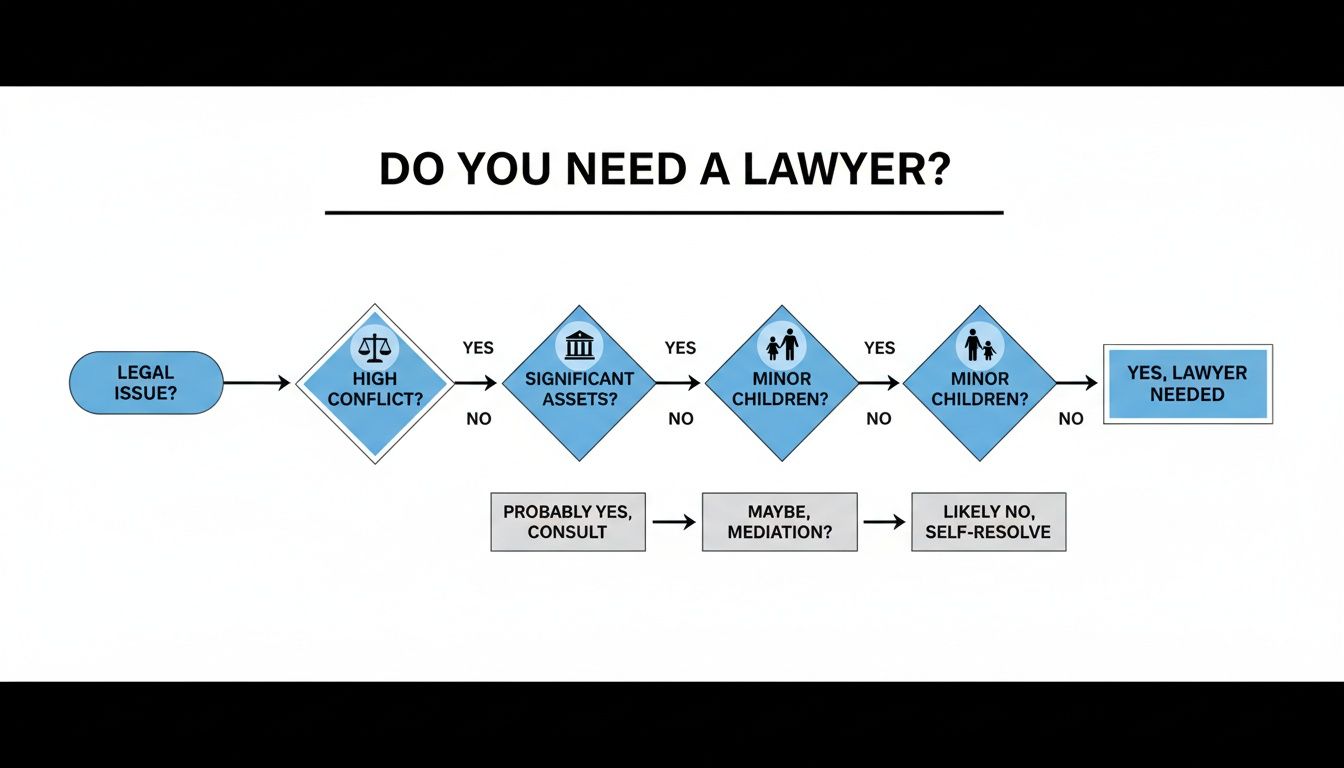
As the flowchart shows, the minute you introduce high conflict, significant assets, or children into the mix, the need for specialized legal guidance becomes crystal clear.
The Value of Specialized Experience
Choosing an attorney with proven, specific experience can make a world of difference in these high-stakes cases. It’s a crowded market out there. In the United States, the family law and divorce lawyer industry supports 56,771 businesses as of 2025. That saturation means you, as the client, have to be picky and prioritize lawyers with focused expertise, not just a general practice.
The core principle here is simple and applies well beyond the legal world. Think about the critical importance of hiring legal professionals in the same way you would about hiring an expert for any other critical task. You wouldn’t let a general contractor perform heart surgery, and you shouldn’t let a jack-of-all-trades lawyer handle the complexities of your family’s future.
To help you identify the right kind of experience for your case, here’s a quick guide.
Matching Your Case to the Right Attorney Expertise
Use this table to identify the type of legal experience that best aligns with your specific family law needs in Texas.
| Your Situation | Key Legal Issues to Consider | Specialized Attorney Experience Needed |
|---|---|---|
| Amicable Divorce, No Kids, Few Assets | Uncontested divorce procedures, property division agreements (if any), final decree drafting. | Experience with collaborative law or uncontested divorce processes to ensure efficiency and accuracy. |
| Custody Dispute with a Co-Parent | Creating parenting plans, possession schedules, child support calculations, navigating Texas’s “best interest of the child” standard. | Deep knowledge of the Texas Family Code, experience in mediation, and, if necessary, litigation skills for custody trials. |
| Complex Financial Estate | Business valuation, dividing investment portfolios, QDROs for retirement accounts, uncovering hidden assets. | A background in finance or a strong network of financial experts; experience with high-net-worth cases is crucial. |
| Military Family Issues | Dividing military retirement/pensions (USFSPA), managing custody during deployments, navigating jurisdiction laws (UCCJEA). | Specific expertise in military divorce law, including federal regulations that interact with Texas state law. |
| Existing Order Needs Changing | Proving a “material and substantial change” in circumstances, modifying child support or custody, enforcement actions. | Strong litigation and negotiation skills for modification and enforcement hearings. |
By matching your needs to an attorney’s specific skill set, you’re setting yourself up for a much smoother process.
Your attorney should be more than just a legal representative; they should be a strategic partner. This means finding someone whose approach aligns with your goals—whether that’s aggressive litigation, collaborative negotiation, or skillful mediation.
Knowing what you truly need is the foundation of a successful search. If you want more guidance on what to look for during those initial calls, check out these positive qualities to look for when interviewing a lawyer. When you define your objectives first, you empower yourself to find an attorney who isn’t just qualified, but is the right partner for your family’s future.
How to Find and Research Potential Texas Attorneys
You’ve done the hard work of figuring out what your case needs. Now comes the real legwork: building a list of attorneys who can actually deliver. This is about more than just a quick Google search. To do this right, you need a methodical approach to cut through the noise and find Texas family law attorneys with proven experience and a solid reputation.

Starting your search can feel like trying to find a needle in a haystack. But if you know where to look, you can quickly narrow down the field to top-tier candidates genuinely equipped to handle your specific situation.
Start with Official and Trusted Sources
Before you get lost in online reviews or flashy websites, your first stop should be the one official source for every lawyer in our state: the State Bar of Texas. Honestly, this is a non-negotiable step in your research.
The State Bar’s website lets you confirm that an attorney is licensed and in good standing. Even more important, it provides a public record of any disciplinary history. This is your first, most critical layer of vetting. It ensures you’re only considering ethical and professional candidates from the get-go.
Another great starting point is a referral from someone you trust—a friend, family member, or even another professional like your CPA or therapist. While personal recommendations are gold, always remember that their case wasn’t your case. Use referrals to get a name, but follow it up with your own independent research.
Evaluating an Attorney’s Digital Footprint
Let’s face it, a law firm’s website is their digital storefront. It can offer a treasure trove of information if you know what to look for.
When you land on a potential attorney’s website, look past the polished headshots and generic promises. You need to dig deeper for signs of genuine expertise:
- In-depth Blog Posts: Do they regularly publish detailed articles explaining the ins and outs of Texas family law? A strong blog shows they are committed to educating clients and have a deep, practical understanding of the law.
- Case Studies or Testimonials: Do they provide specific (though anonymized) examples of cases they’ve handled? This shows real-world experience, not just textbook knowledge.
- Clear Practice Area Focus: Is the website laser-focused on family law, or is it a general practice that lists family law among a dozen other areas? You want a dedicated family law firm with specialized knowledge.
It’s also helpful to understand how law firms market themselves. For instance, learning how attorneys leverage TV advertising to win local clients can give you some context for the big names you see on billboards and commercials. It’s all part of building a bigger picture so you can be a more informed consumer.
The Significance of Board Certification
As you dig into your research, you might see that some attorneys are Board Certified in Family Law by the Texas Board of Legal Specialization. Pay close attention to this. It’s a significant credential that shouldn’t be overlooked.
Board Certification is a mark of the highest commitment to a specific area of law. Only a small fraction of Texas attorneys achieve this distinction, which requires substantial experience, peer reviews, and passing a rigorous exam. It signals a level of expertise that goes far beyond standard licensing.
This certification is a powerful indicator that an attorney is a recognized expert in their field. While not having it isn’t a deal-breaker, having it is a strong positive signal when you’re sizing up your candidates.
Finally, client reviews on platforms like Google and Avvo can offer valuable peeks into the actual client experience. Look for patterns in the comments. Are clients consistently praising the lawyer’s communication, strategy, or empathy? Make sure to read both the glowing and the not-so-glowing reviews to get a balanced perspective. For more detailed advice on this part of the process, our guide offers additional tips for hiring a divorce attorney in Texas. By pulling all these threads together, you can build a strong, well-vetted list of attorneys to call for that all-important first consultation.
Making the Most of Your Initial Consultation
You’ve done your homework and narrowed down your list of potential Texas attorneys. Now comes the most critical part of the process: the initial consultation. This meeting is so much more than a sales pitch. It’s your chance to interview a potential legal partner, get a feel for their approach, and decide if you feel genuinely understood and confident in their abilities.

Walking into this meeting prepared can make all the difference. It lets you get past the surface-level stuff and have a real conversation about strategy, communication, and what you can realistically expect. To get a deeper look at this crucial first step, our guide on what to expect during your initial consultation can help you get ready.
How to Prepare for a Productive Meeting
To get the most out of your time, pull together any relevant documents you have. Having the paperwork on hand gives the attorney a much clearer picture of your situation and allows them to offer specific advice, not just generalities.
Try to bring whatever you can from this list:
- Existing Court Orders: If you’re looking to modify a previous custody or support order, the current one is absolutely essential.
- Financial Documents: Things like recent pay stubs, tax returns, and even a simple list of your assets and debts provide critical context, especially in a divorce.
- A Written Timeline: Briefly jot down the key events and dates that led you here. This keeps you focused and makes sure you don’t forget any important details under pressure.
- Your List of Questions: Don’t try to remember everything in the moment. Write down every single question you have so you can leave feeling clear and confident.
This simple prep work transforms the meeting from a basic intro into a true working session. It also gives you a real feel for how the attorney thinks and operates.
Key Questions to Ask Beyond the Basics
Of course, you’ll talk about fees. But the questions that give you the most insight dig into an attorney’s philosophy, strategy, and communication style. These are the things that will truly define your working relationship and shape the outcome of your case.
Here are a few powerful questions to have in your back pocket:
- “Based on what I’ve shared, what is your initial strategic approach to a case like mine?” This question separates the strategic thinkers from those who just react. Their answer should be thoughtful and reference Texas law and your specific goals.
- “What is your communication philosophy with clients? Who will be my primary point of contact?” This sets expectations right from the beginning. A good firm will have a clear system and can explain the roles of attorneys, paralegals, and other staff in keeping you in the loop.
- “What percentage of your cases settle in mediation versus going to trial?” This tells you a lot about their negotiation skills and their comfort level in the courtroom. You want an attorney who is a pro at both.
A truly effective family law attorney is both a compassionate counselor and a skilled strategist. Pay attention to how they listen. Do you feel heard? Do they show empathy for your situation while providing clear, realistic legal guidance? Trust your gut feeling on this.
Assessing Their Approach to Conflict Resolution
Not every case needs to be a drawn-out, bitter courtroom battle. In fact, finding an attorney skilled in alternative dispute resolution (ADR) like mediation can save families from the emotional and financial drain of a prolonged fight.
It’s a striking fact that around 90% of custody cases actually settle outside of court. This statistic underscores why strong negotiation expertise is so vital in a field where 56,970 lawyers compete across the US. In Texas, courts often encourage a collaborative approach, especially when kids are involved, to help preserve co-parenting relationships for the future.
During your consultation, ask them directly about their experience with mediation and collaborative divorce. Do they view it as a primary tool for resolution or just a box to check? Their answer reveals a great deal about their overall philosophy. The ideal attorney is one who can advocate fiercely for you in court but also has the finesse to skillfully negotiate a fair settlement. That’s the versatile and effective partner you need.
Let’s Talk Money: Decoding Legal Fees and Retainer Agreements
Talking about money is often the most awkward part of hiring an attorney, but it absolutely shouldn’t be. When you’re making choices that will impact your family for years to come, total financial clarity isn’t just a nice-to-have; it’s essential.
Understanding exactly how a law firm bills for its services is a critical step in choosing the right person to fight for you. It empowers you to move forward with confidence, free from the anxiety of surprise bills down the road.
Frankly, a lawyer who is upfront and transparent about their fees is showing you a huge green flag. It tells you they respect you as a client and want to build a partnership based on clear, mutual expectations from day one. Let’s break down the common financial setups you’ll run into in Texas family law so you can have this conversation like a pro.
Common Ways Lawyers Charge for Their Work
In Texas family law, you’ll generally find a few different models for how attorneys bill for their time and expertise. A good lawyer will explain exactly which one applies to your case and, just as importantly, why it’s the best fit.
Here’s a quick rundown of the most common structures:
- Hourly Rates: This is the go-to model for most family law cases. The attorney and their staff (like paralegals) bill for the actual time they spend working on your case. This is usually broken down into small increments, like 6-minute or 15-minute intervals. The rates will differ based on who is doing the work—a senior partner’s time costs more than a paralegal’s, for example.
- Flat Fees: For more predictable and straightforward matters, like an uncontested divorce or drafting a basic prenuptial agreement, some firms will offer a flat fee. You pay one single, pre-determined price for the entire job, no matter how many hours it ends up taking.
- Retainers: This is probably the most misunderstood concept. A retainer isn’t the total fee for your case. It’s an upfront payment that the law firm holds in a special trust account for you. As they do work and rack up hourly fees, they pay themselves from that account. Think of it as a down payment to secure their services and cover the initial costs of getting your case moving.
For most contested family law situations in Texas—like a complex divorce or a heated custody battle—you can expect an hourly billing structure that starts with an initial retainer payment.
What Is a Retainer, and How Does It Actually Work?
The best way to think of a retainer is like putting money on deposit to secure your attorney’s time and attention. When you sign the fee agreement, you’ll pay the initial retainer amount needed to get started.
By law, the State Bar of Texas requires this money to be kept in a special client trust account. It’s still your money until the firm has officially earned it by performing work on your case.
Each month, you’ll receive a detailed, itemized invoice. This bill will show every task performed, who did it, how long it took, and the cost. The firm then pays that invoice using the funds held in your trust account.
A critical concept to grasp is the “replenishing retainer.” Most fee agreements state that if the balance in your trust account dips below a certain amount, you’ll need to deposit more funds to bring it back up to the required level. This ensures your legal team can continue working on your case without interruption.
Before you sign anything, make sure you are crystal clear on:
- The exact amount of the initial retainer.
- The hourly rates for every single person who might touch your file (attorneys, paralegals, legal assistants).
- The minimum balance you’re required to keep in your trust account.
- How and when you will receive invoices to track how your money is being used.
This level of transparency is non-negotiable for a healthy and trusting attorney-client relationship. If you’re looking for clear guidance on a divorce or family law matter, our team is here to provide the straightforward answers you deserve.
Comparing Common Family Law Fee Structures
To help you get a clearer picture, here’s a simple breakdown of the typical fee arrangements you’ll encounter. Understanding the pros and cons of each will help you discuss options knowledgeably during your consultations.
| Fee Type | How It Works | Best For |
|---|---|---|
| Hourly Rate | You are billed for the actual time spent on your case by the legal team. This is usually drawn from an upfront retainer. | Complex or unpredictable cases like contested divorces, custody battles, or high-net-worth property division where the total time commitment is unknown. |
| Flat Fee | A single, all-inclusive price is agreed upon for a specific legal service from start to finish. | Straightforward, predictable matters with a clear scope, such as an uncontested divorce, a simple prenuptial agreement, or an adoption. |
| Retainer Fee | An upfront payment held in trust to cover future legal services. It’s not the total cost but acts as a deposit against hourly billing. | The vast majority of family law cases that are billed hourly. The initial retainer secures the attorney and covers the first phase of work. |
Ultimately, the right fee structure depends entirely on the specifics of your situation. Don’t ever hesitate to ask pointed questions until you feel completely comfortable with the financial arrangement.
Critical Red Flags to Avoid When Hiring an Attorney
Choosing the right family law attorney is just as much about spotting the wrong one as it is about finding the right one. Your gut instinct plays a huge role in this, but knowing the specific, tangible warning signs can save you from a partnership that could seriously harm your case.
When you’re in a vulnerable position, it’s all too easy to overlook issues that should give you serious pause.

Trusting your gut is important, but being armed with knowledge of what to watch for is even better. Let’s walk through the critical red flags that signal you should probably keep looking.
Overpromising and Unethical Guarantees
This is the biggest one of them all. If an attorney guarantees a specific outcome—”I guarantee you’ll get full custody” or “I promise we’ll win you the house”—walk away immediately. Not only is this impossible in the unpredictable world of family law, but it’s also a serious ethical violation.
A skilled attorney will talk through potential strategies, likely outcomes, and risks based on the facts of your case and the Texas Family Code. They will never make a promise they can’t legally or ethically keep.
A confident attorney explains their strategy and manages your expectations realistically. An unethical attorney sells you a guaranteed fantasy. Your family’s future is too important for empty promises.
Poor Communication and a Lack of Empathy
Pay close attention to communication from the very first interaction. A law firm that is difficult to get ahold of, fails to return your calls, or makes you feel rushed is showing you exactly what you can expect if you hire them.
Keep an eye out for these warning signs:
- Unreturned Calls: If they don’t value your time before you’ve even signed a retainer, they certainly won’t after.
- Vague Answers: A good lawyer can explain complex legal ideas in a way you can understand. Evasive or confusing answers are a major concern.
- Noticeable Disinterest: Do they seem distracted or dismissive of your concerns? Family law is deeply personal. You need an advocate who shows genuine empathy for your situation, not someone who treats you like just another case file.
High-Pressure Tactics and a Lack of Specialization
Be wary of any attorney who pressures you to sign a retainer agreement on the spot. This is your decision, and you deserve the time and space to make it thoughtfully. High-pressure sales tactics are a clear sign that a firm might be more focused on its bottom line than your best interests.
Another huge red flag is a lack of focus. A “jack-of-all-trades” lawyer who handles personal injury, criminal defense, and family law on the side won’t have the deep, specialized knowledge your case requires. The U.S. family law sector is massive, handling over 1.09 million divorces annually on top of hundreds of thousands of custody and adoption cases. This level of complexity demands a specialist. Firms with a strong track record in complex areas like military divorces or business valuations are far better equipped to protect your future. You can discover more insights about family law statistics on growlaw.co.
Ultimately, trusting your instincts during this process is paramount. If something feels off, it probably is. The right attorney will make you feel understood, respected, and confident in their ability to guide you through this difficult time.
Common Questions About Choosing a Lawyer
Even with a detailed checklist and a lot of careful research, it’s natural to have a few last-minute questions. You’re about to make one of the most significant decisions for your family’s future, and choosing a family law attorney is a complex process. You’re not just hiring a lawyer; you’re bringing on a partner who will guide you through an intensely personal and often difficult time. Feeling 100% confident is key.
Let’s walk through some of the most common questions we hear from clients as they’re making their final decision. We want to give you direct, real-world answers to help you move forward with complete peace of mind.
What if I Hire an Attorney and Realize They Are Not the Right Fit?
This is a totally valid and common fear. First, let’s be clear: you have an absolute right to change attorneys at any point in your case. Your comfort and confidence are paramount.
If you start feeling that your lawyer is unprepared, unresponsive, or that their strategy just doesn’t align with your goals anymore, you can—and should—make a change.
The process is more straightforward than most people think. Here’s how it usually works:
- You’ll notify your current attorney in writing that you are ending their services.
- You hire your new attorney, and they take it from there.
- Your new lawyer files a document with the court called a “Notice of Substitution of Counsel,” which officially puts them in the driver’s seat of your case.
While switching lawyers mid-stream might feel disruptive, sticking with the wrong legal partner can be far more damaging in the long run. If you’ve lost faith in your representation, getting a second opinion through a free consultation with another firm is an empowering first step.
How Important Is It to Hire a Lawyer Who Practices in My County?
In short: it’s a huge strategic advantage. While any attorney licensed in Texas can technically practice anywhere in the state, there’s an immense, practical value in hiring someone who is a regular in the courthouse where your case will be heard.
Local attorneys bring invaluable knowledge that you simply can’t find in the Texas Family Code. They know the unwritten rules and the specific day-to-day procedures of that court. But more importantly, they know the people.
A local attorney knows the judges—their temperaments, their judicial philosophies, and how they tend to rule on specific issues. They also know the opposing lawyers, which is a massive asset in negotiations. This kind of local insight isn’t learned from a book; it’s earned through years of hands-on experience in that specific community.
Our attorneys at The Law Office of Bryan Fagan are in the courts across the greater Houston, Dallas-Fort Worth, Austin, and San Antonio metro areas every single day. That deep local presence gives our clients a home-field advantage.
Will I Work Directly with the Attorney or a Paralegal?
The answer should be both. In a well-run, efficient law firm, you should have a dedicated legal team supporting you, not just one person. This team approach is designed to give you comprehensive support while being smart about your legal costs. The key is understanding who does what.
Your attorney is your chief strategist. They provide legal advice, develop your case strategy, represent you in court, and negotiate for you. Every major legal decision and piece of guidance will come directly from them.
But behind every great attorney is an experienced paralegal. They are the backbone of the team, managing the flow of information, preparing and filing court documents, and communicating with you about deadlines, scheduling, and gathering documents. By having paralegals handle these tasks, your overall costs are kept down because their hourly rates are lower than an attorney’s.
A good firm will have a clear system. This is a great question to ask during your consultation: “What does your team structure look like, and who is my main point of contact for different questions?” The answer should make you feel confident that you’ll always have access to the right person at the right time.
Is an Aggressive Attorney Always the Best Choice?
The “bulldog” attorney can seem appealing, especially when you’re feeling hurt or wronged. But the truth is, an aggressive-at-all-costs approach often backfires. The best approach is one that’s tailored to the unique facts of your case and what you want for your family’s future.
You absolutely need a strong advocate who won’t back down. However, a lawyer whose only tool is a hammer can escalate conflict for no reason. This drives up legal fees and can do permanent damage to co-parenting relationships—a terrible outcome when kids are involved.
A truly skilled family law attorney is a versatile strategist. They know when to litigate fiercely in the courtroom and when to pivot to masterful negotiation in mediation. They can fight for you without reservation, but they’re also creative enough to find amicable solutions that protect your long-term interests and family harmony. You don’t want a one-trick pony; you want a strategic thinker who adapts to win.
If you need help navigating divorce, custody, or estate planning in Texas, contact The Law Office of Bryan Fagan today for a free consultation for tailored guidance.